Gravitational Lensing
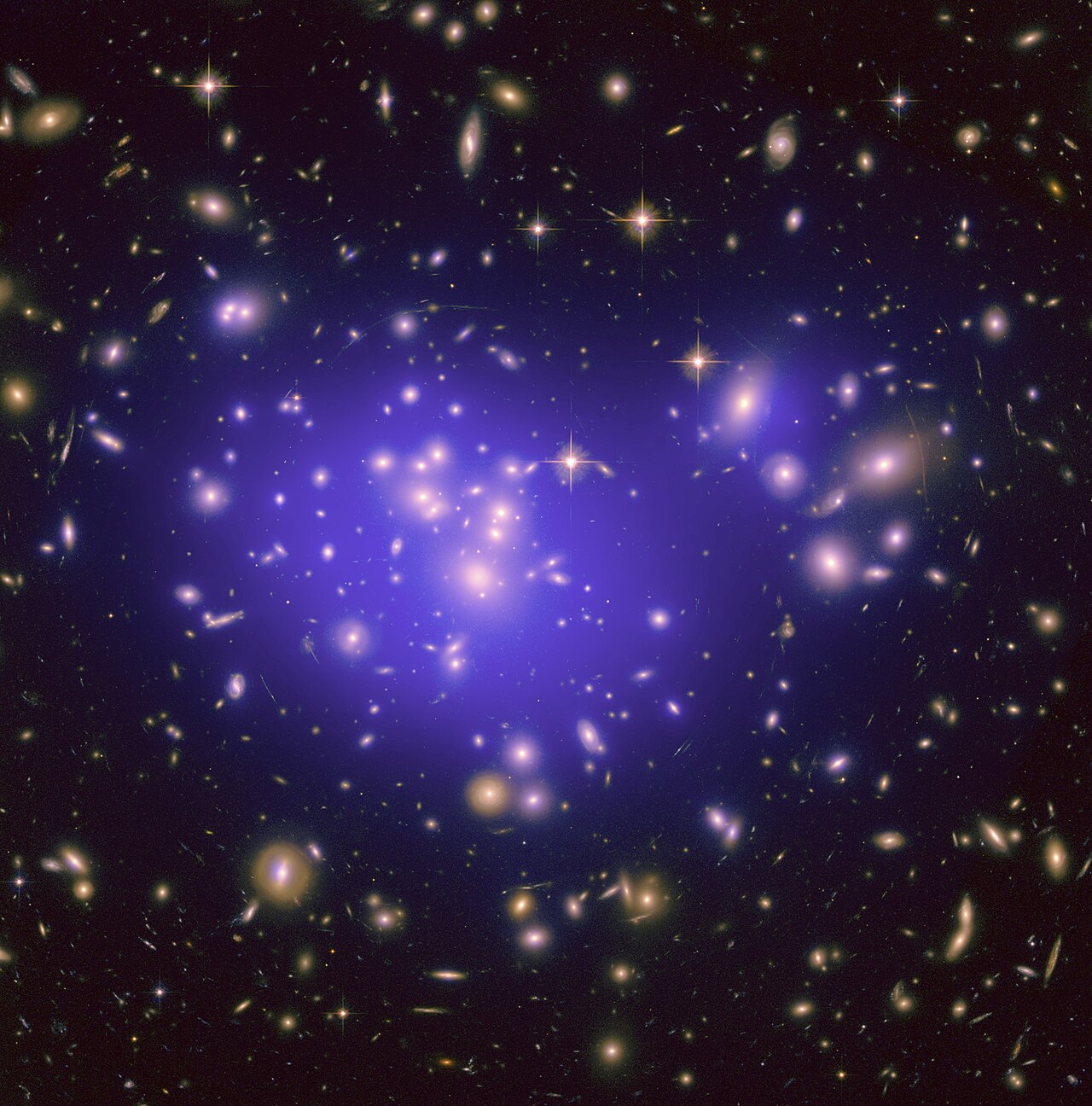
If mass curves spacetime, then even light — following the straightest path — must bend as it passes a massive object. The first dramatic confirmation came in 1919, when Arthur Eddington measured starlight deflected by the Sun during a total eclipse, shifting the stars' apparent positions by exactly the amount Einstein predicted.[1] Today this gravitational lensing is a routine tool: clusters of galaxies magnify and distort the light of far more distant ones behind them, and the amount of bending reveals how much unseen mass is there — one of our best ways to map dark matter.[2]
What lensing looks like
The shape you see depends on how precisely the distant source, the lensing mass, and Earth line up. A near-perfect alignment wraps the source's light into a ring — an Einstein ring; a slight offset instead produces multiple separated images, or bright curved arcs.[3]
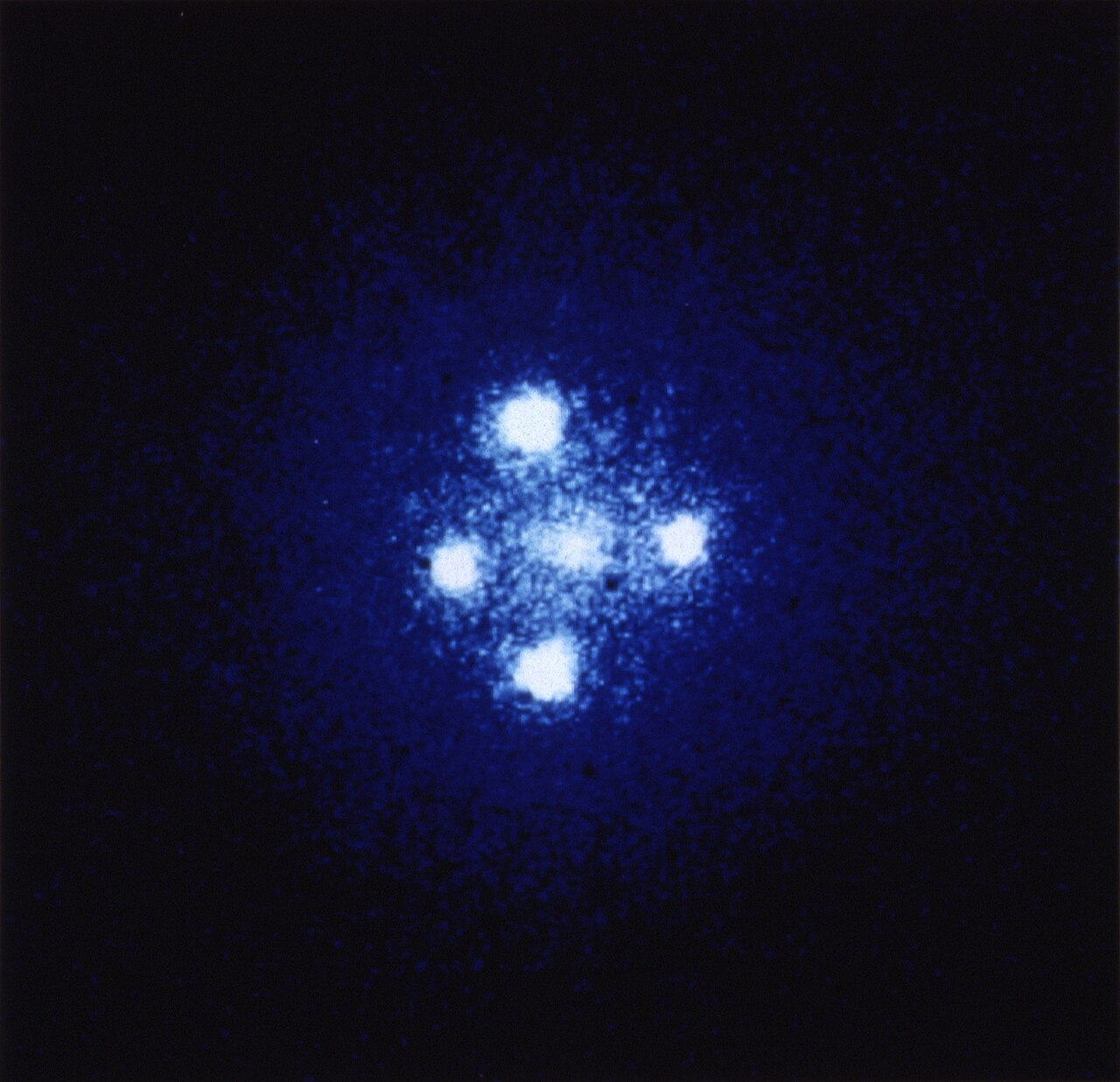
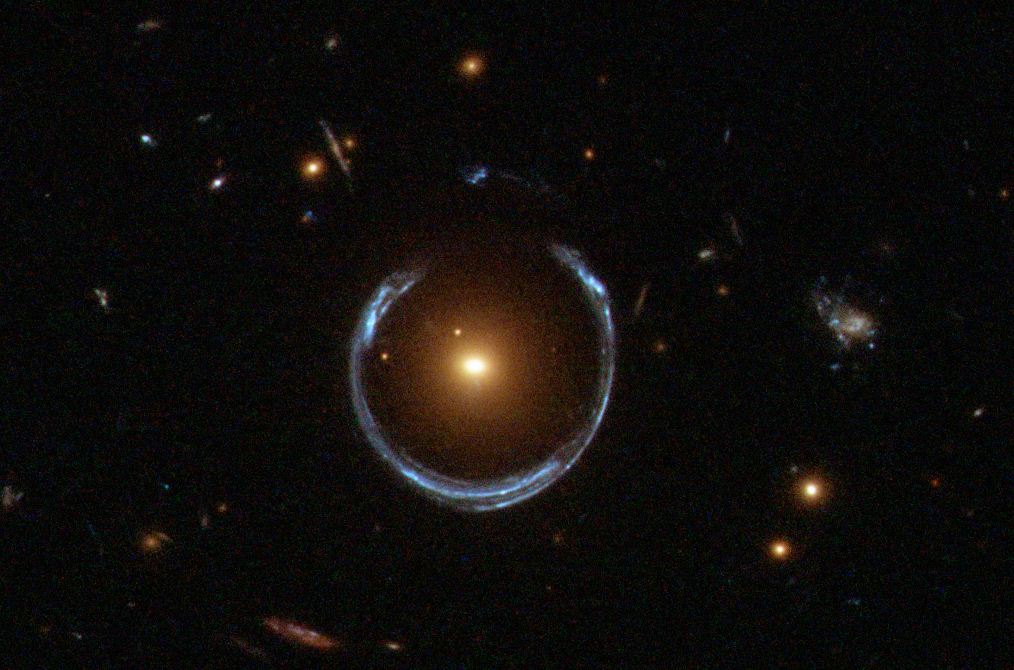
When the lens is a whole galaxy cluster, its enormous mass magnifies and stretches dozens of background galaxies at once into thin arcs. Because ordinary matter alone can't bend light this strongly, the arc pattern betrays the cluster's hidden dark matter — lensing lets us weigh and map mass we cannot see.
Pushed to its extreme, the same light-bending is what gives a black hole its silhouette: rays skimming the photon sphere are lensed around the hole into the bright ring the Event Horizon Telescope imaged.